Home Hatchery
Hatchery and seed
Every farm starts in the lab: healthy seed of assured size and density, by two routes.
How a giant kelp farm begins
Macrocystis pyrifera alternates between a giant plant and a microscopic stage. Hatchery work is about controlling that invisible stage. There are two routes to produce seed: choose one and walk through its steps.
Broodstock selection
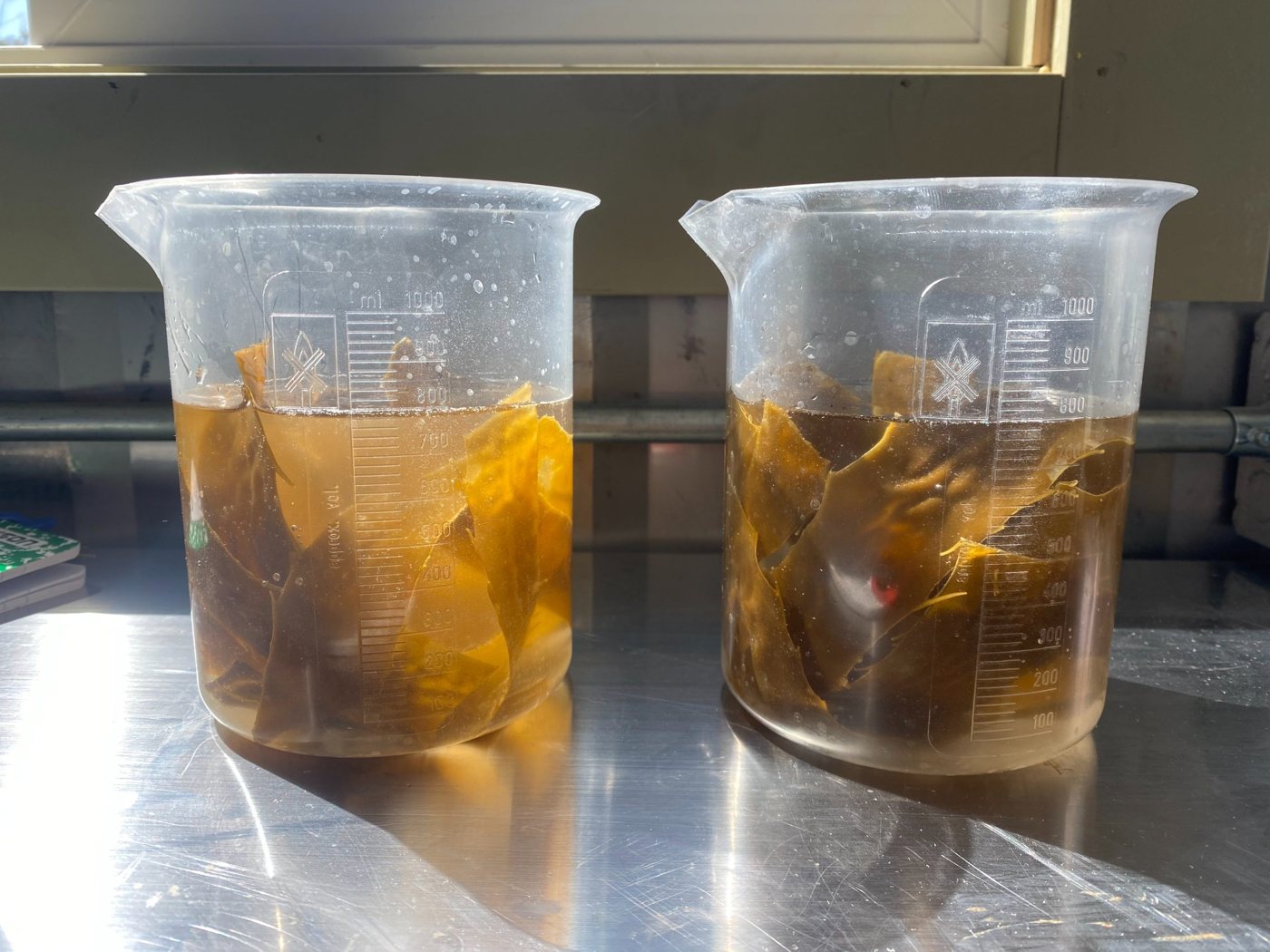
Fertile blades near the base of the plant develop sori, dark patches where millions of spores form. They are collected, cleaned and selected by maturity and origin.
What we doProtocols for collecting, cleaning and shipping sori, including shipments abroad.
Zoospore release
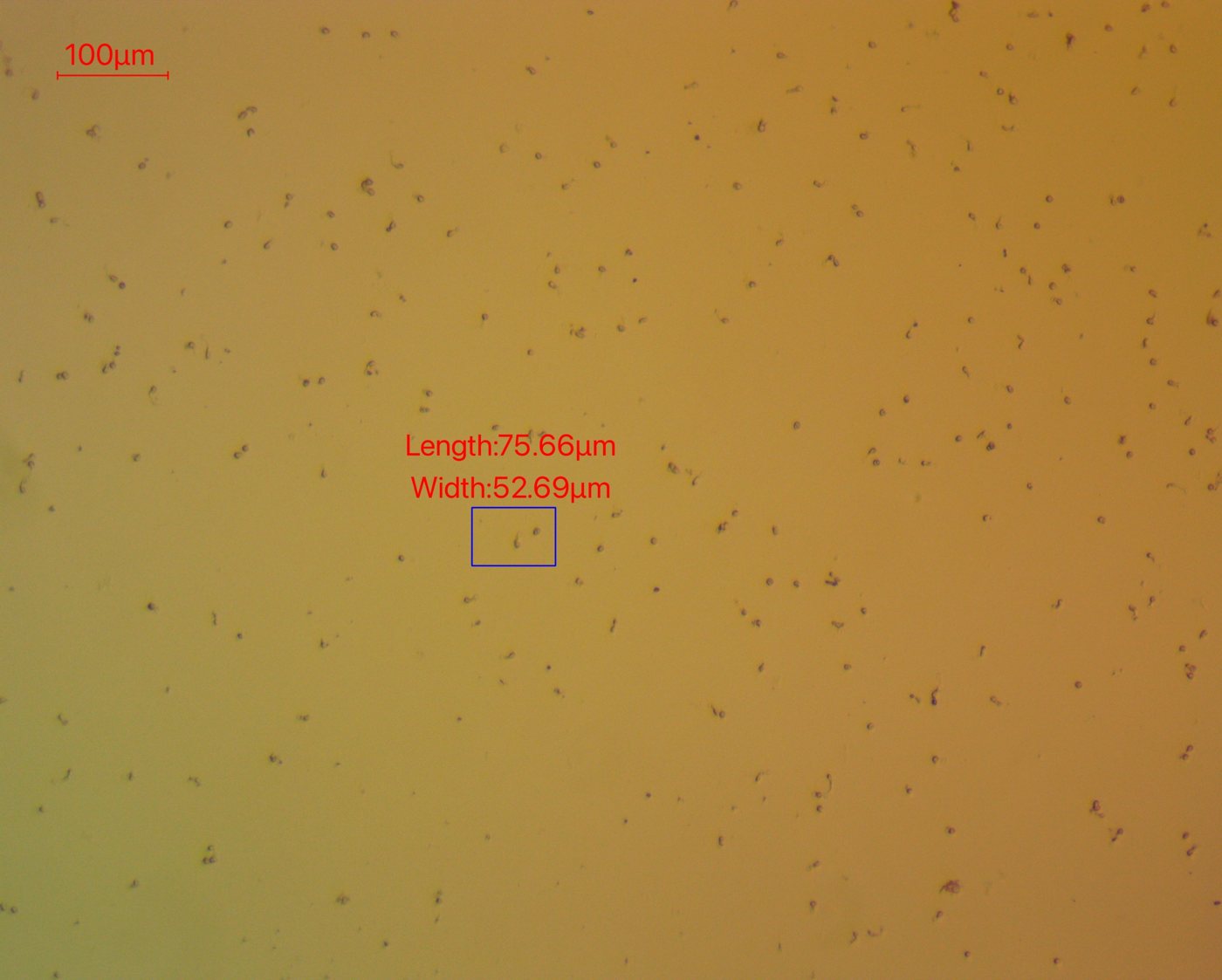
In the laboratory the sori release zoospores: swimming cells a few microns long looking for a place to settle. Temperature, light and hygiene decide how many survive.
What we doControl of spore density and bacterial contamination from day one.
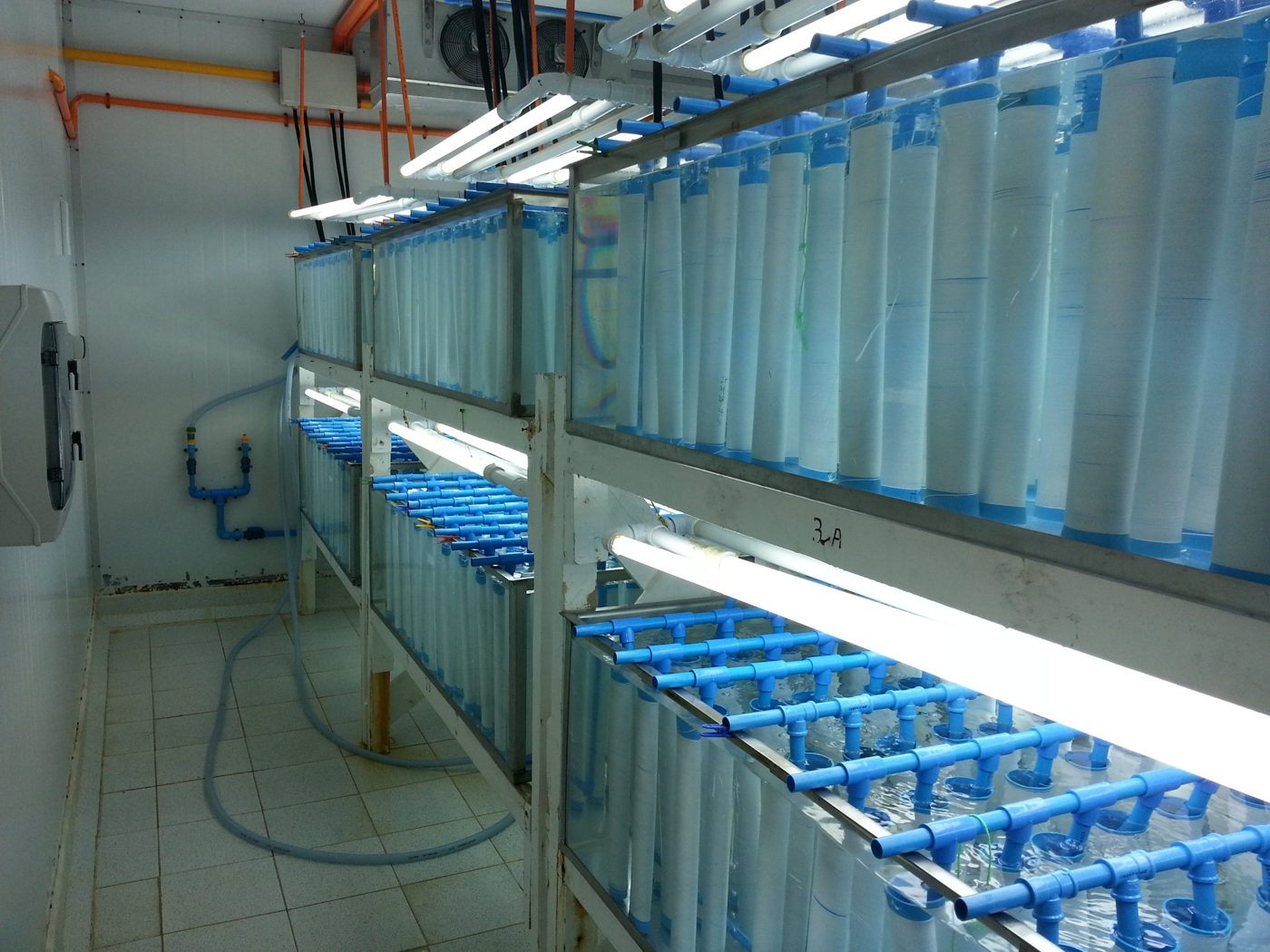
Spool seeding
Zoospores settle on fine twine wound on spools, inside tanks with controlled light, temperature and nutrients. In six to eight weeks the sporophytes reach a few millimeters and the twine is ready to go to sea.
What we doProduction of seeded spools, with density and contamination control throughout the tank period.
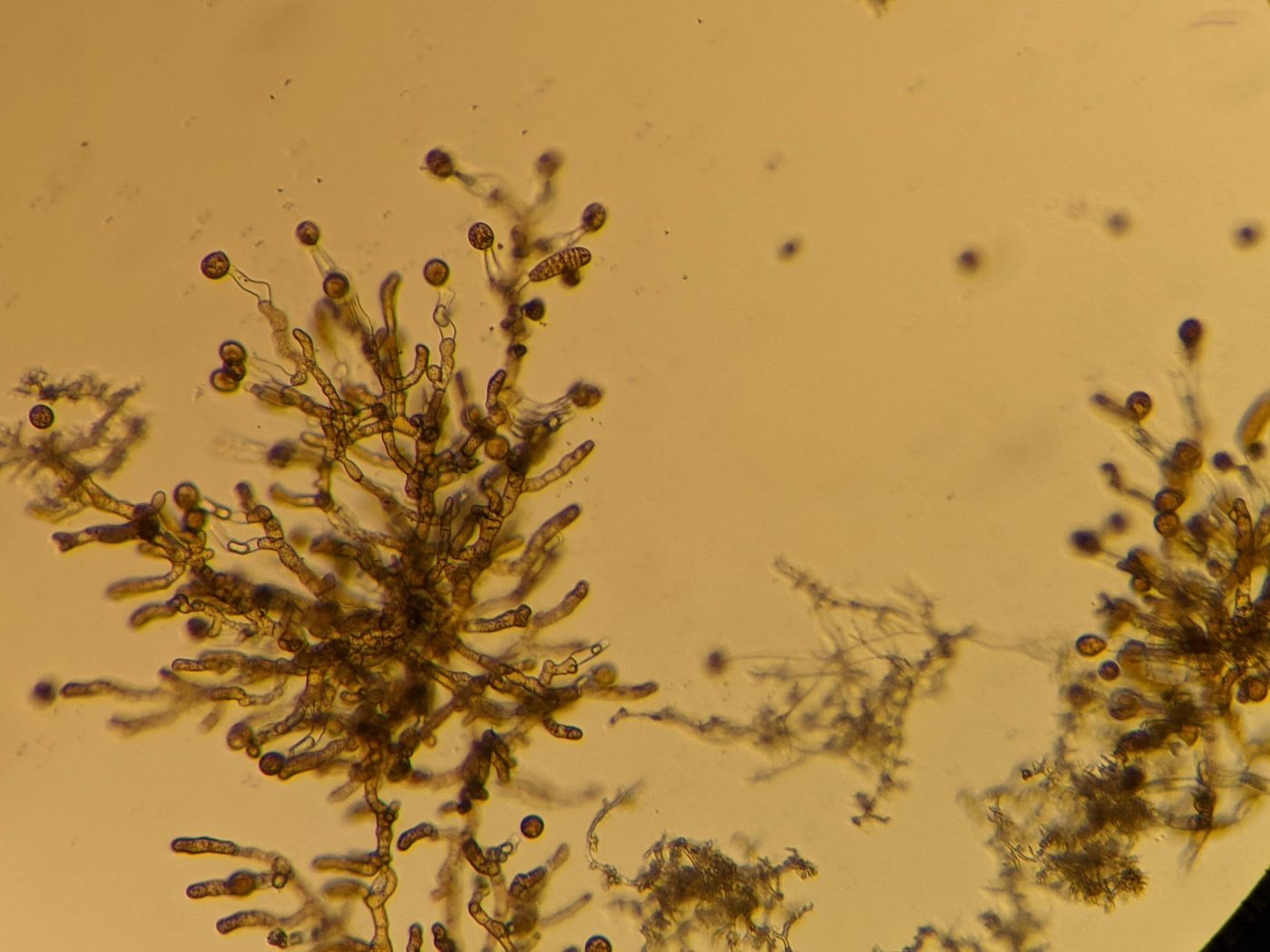
Gametophytes in the lab
Zoospores germinate into microscopic male and female gametophytes that are kept free floating in culture medium, in a vegetative growth phase without reproduction.
What we doGametophyte isolation and culture under controlled light, temperature and nutrients.
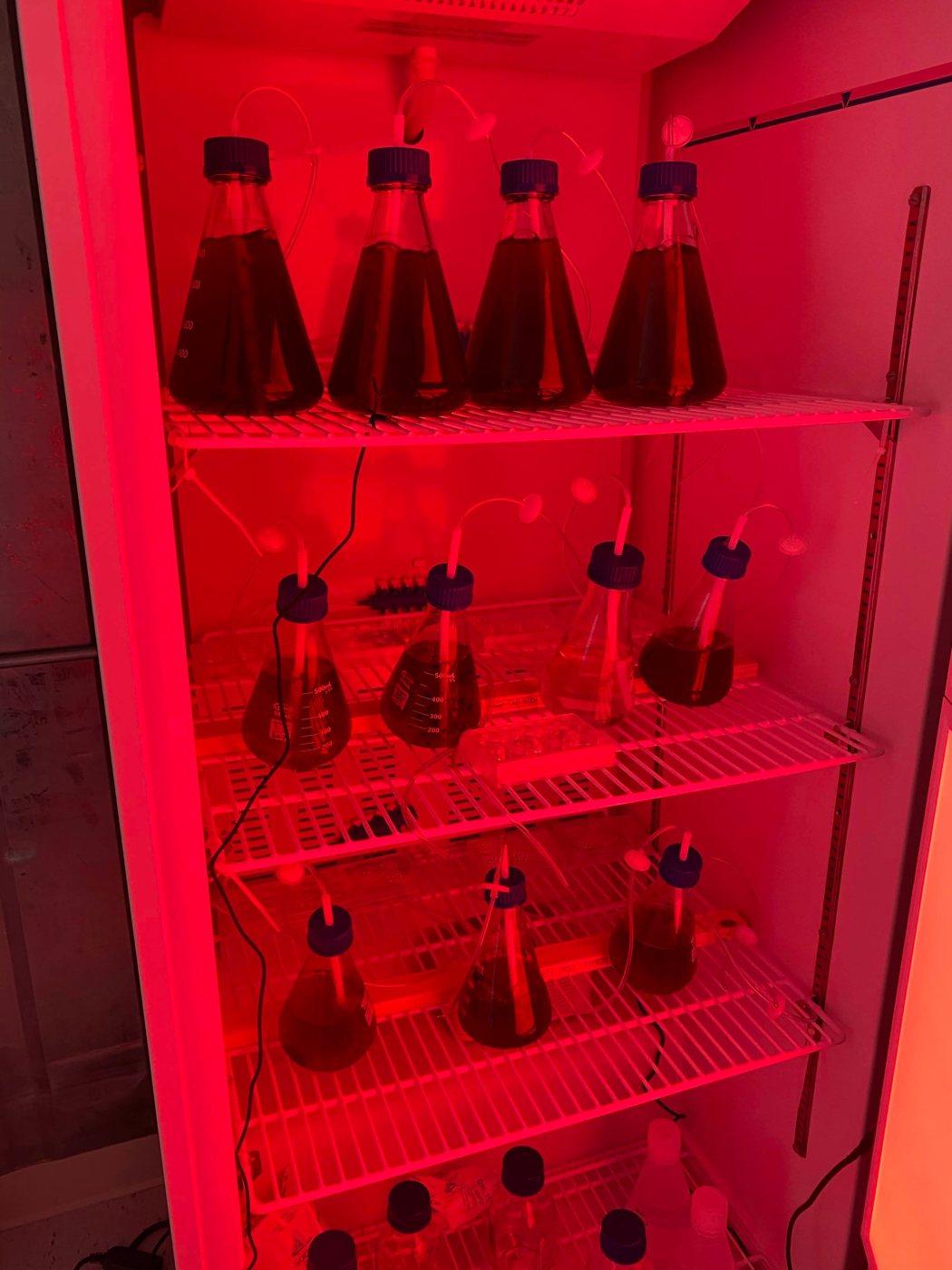
Bank and propagation
Stock cultures kept under low light and temperature serve as a germplasm bank for years. From them, biomass is multiplied by fragmentation in flasks, carboys and photobioreactors, without relying on new wild broodstock.
What we doGermplasm banks by origin and production scale propagation for each season.
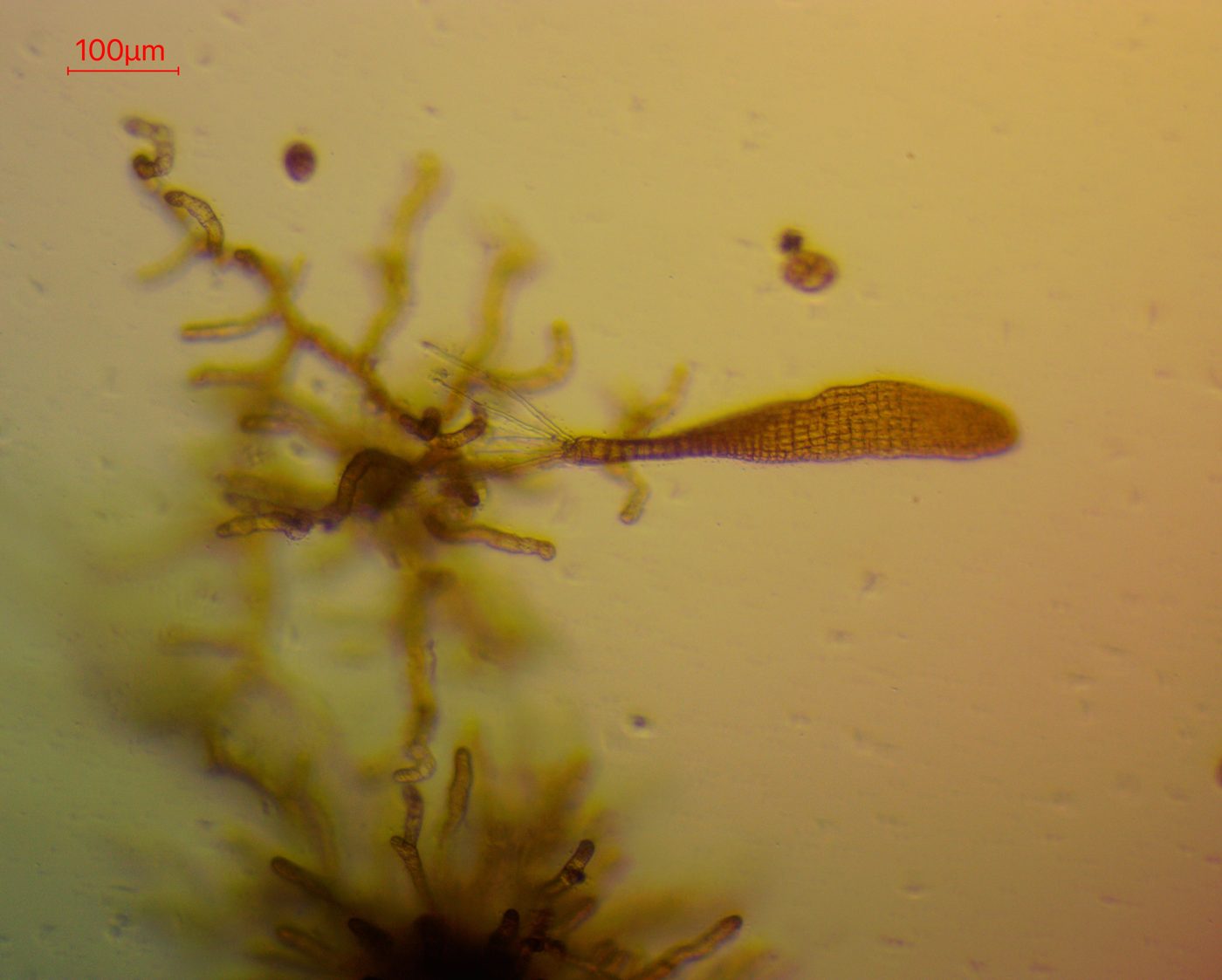
Induction
About three weeks before seeding, a change in light and photoperiod triggers reproduction. Gametophytes produce eggs and sperm, and the fertilized eggs give rise to the first sporophytes.
What we doInduction trials per batch to secure culture response on the seeding date.
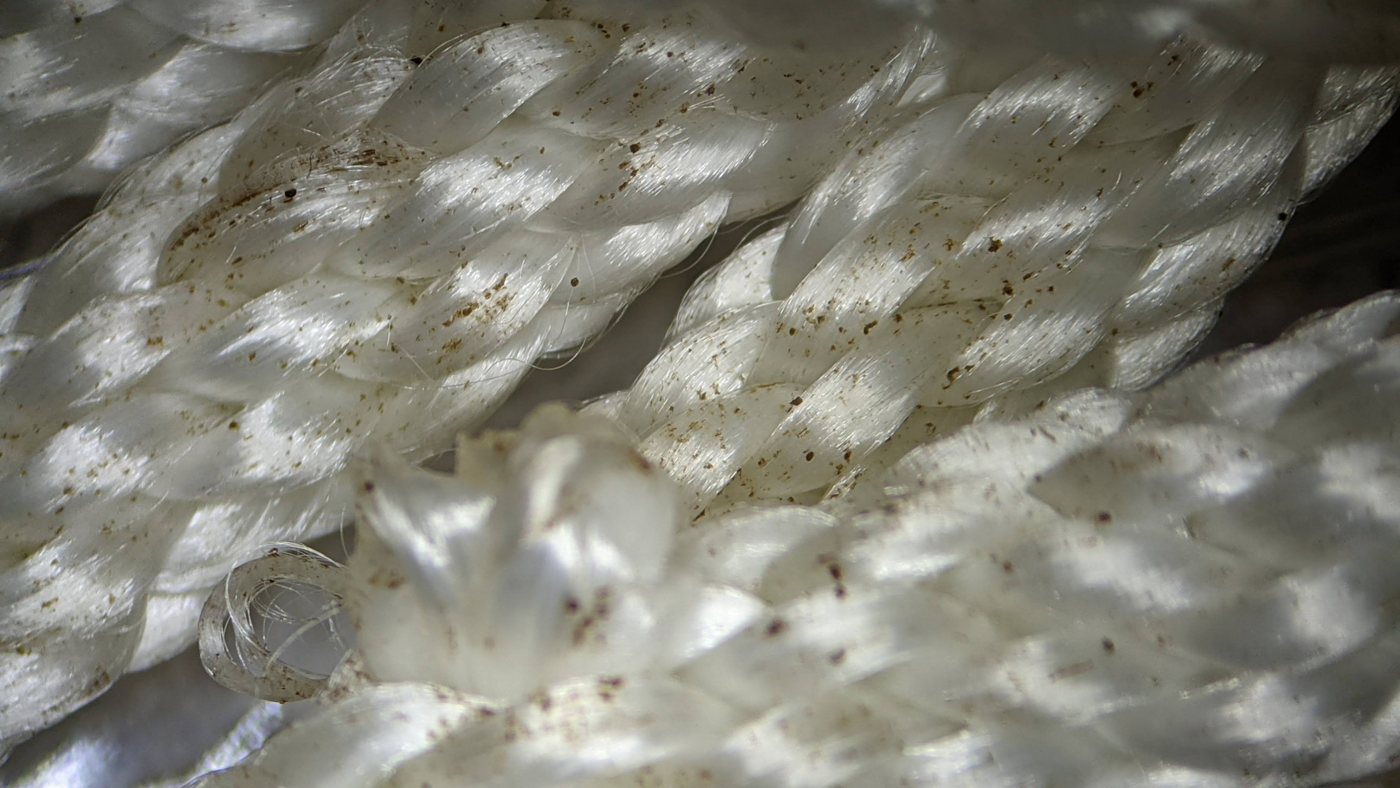
Seeding
Induced seed is applied to the grow rope in two steps with a seeding machine: first the suspension of sporophytes and gametophytes, then a natural binder that fixes it to the fibers. It can also be seeded onto spools, as in the traditional route.
What we doMechanized direct seeding and spool seeding, depending on site and project scale.
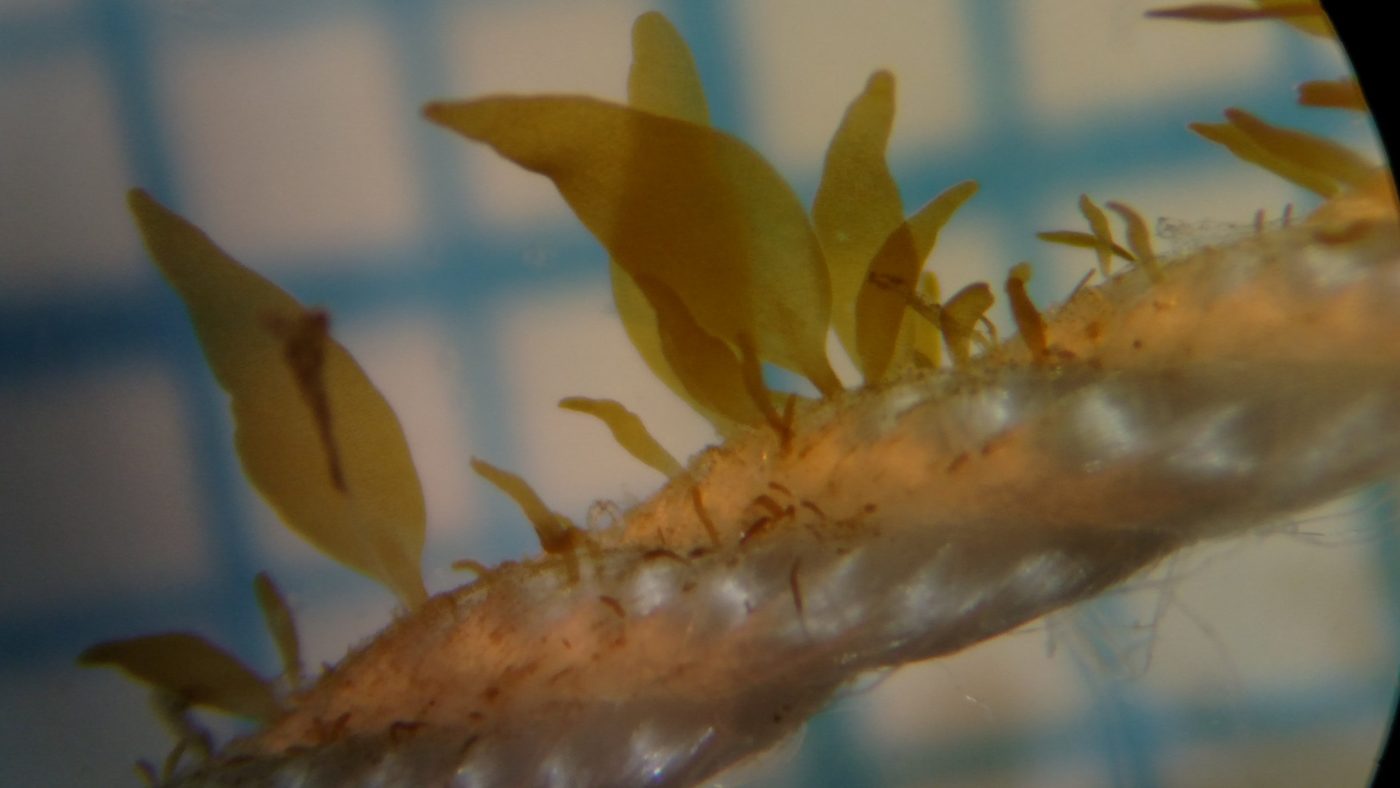
Juvenile sporophytes
The sporophyte is the stage that grows into a plant several meters long. The first blades appear attached to the twine or grow rope and are tracked under the microscope until outplanting.
What we doSize and density monitoring to deliver seed with guaranteed parameters.
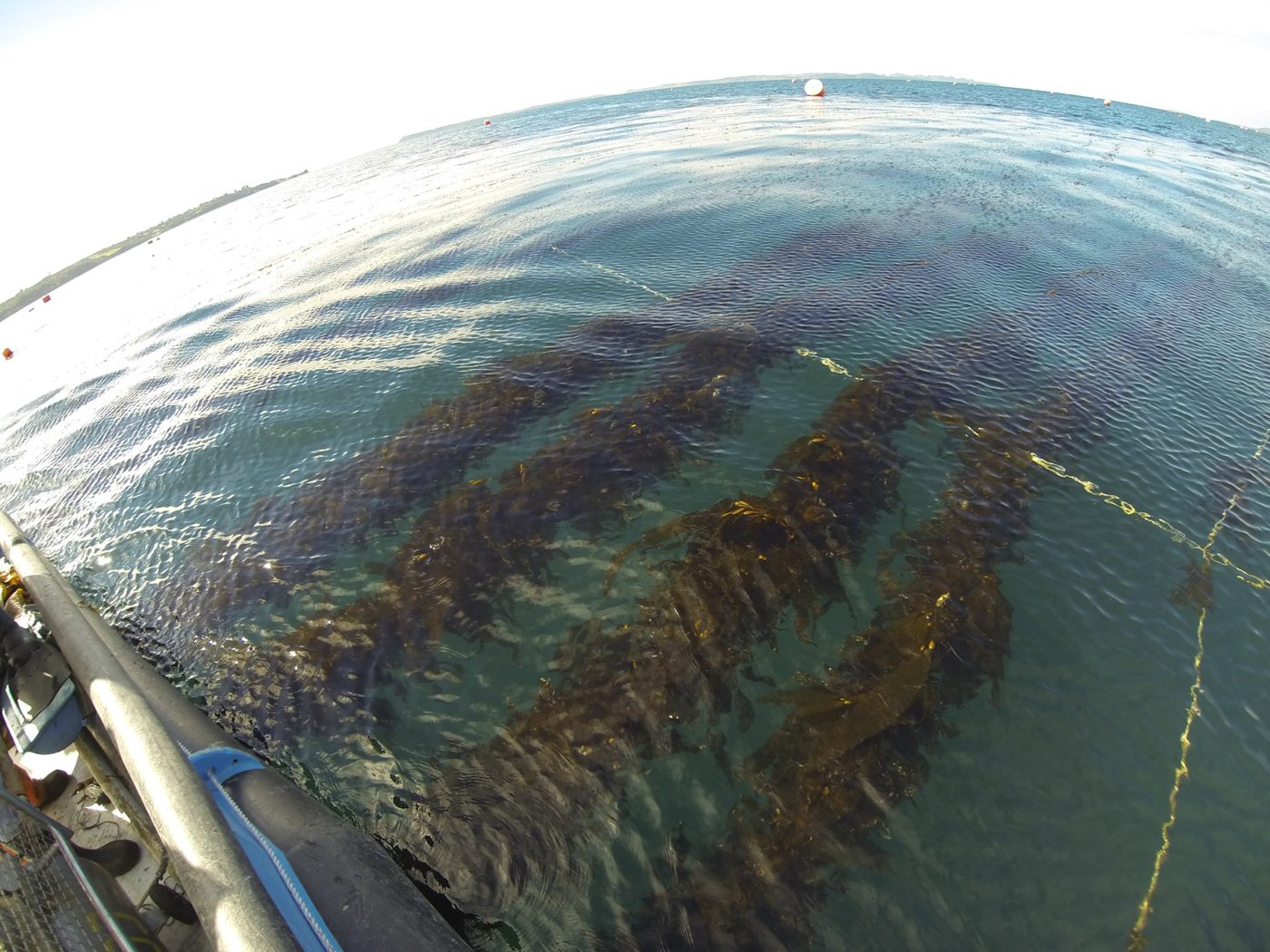
Farming at sea
At the farm site, the spool twine is wrapped around the longline, or the seeded rope is deployed directly, held by buoys and moorings. In a few months giant kelp can reach several meters and is ready to harvest.
What we doDesign, installation and operation of farm systems in Chile and abroad.
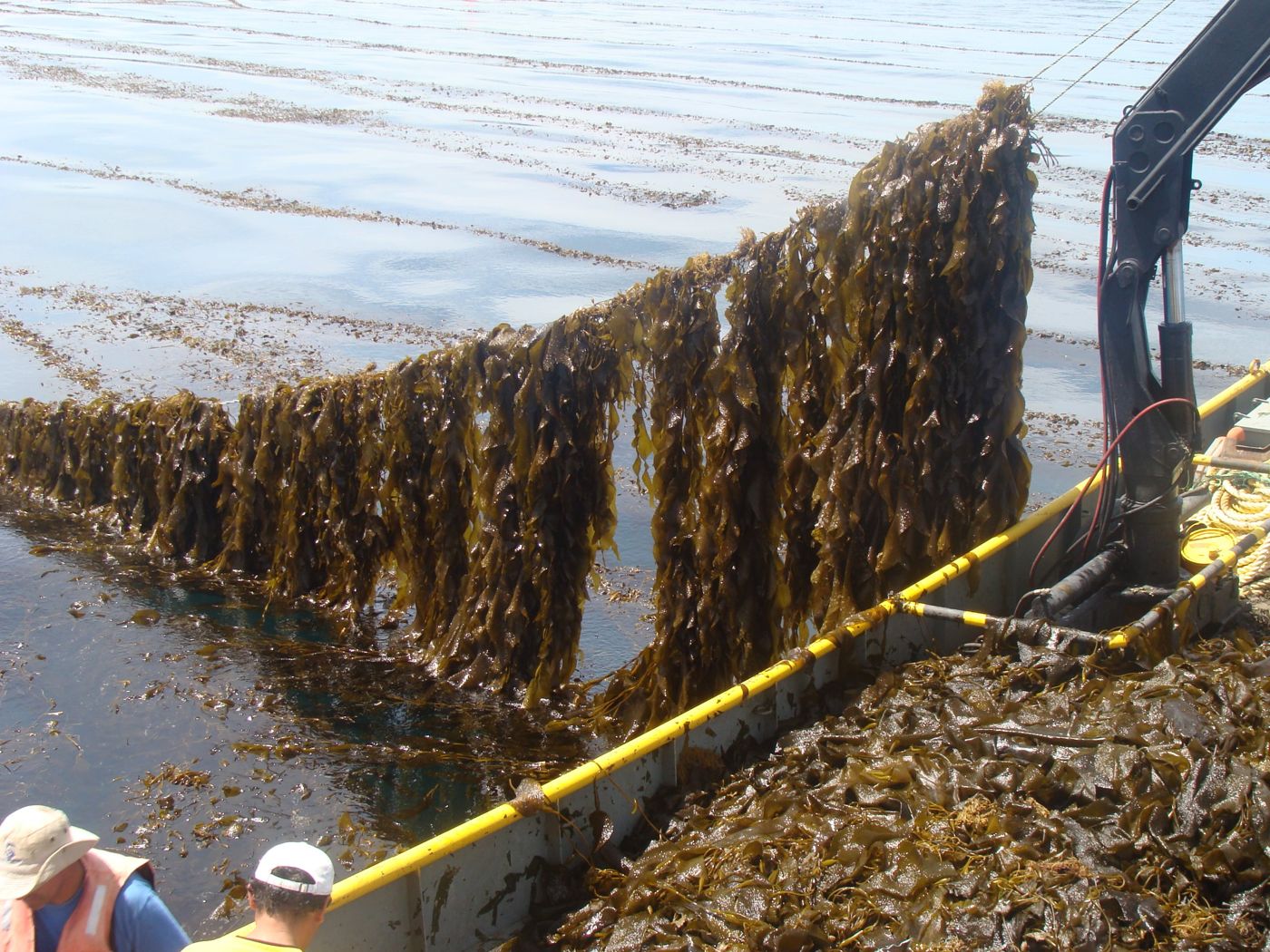
Harvest
When the kelp reaches its target biomass, the lines are hauled with a crane and the seaweed is cut and loaded on board. Harvest can be total or partial, leaving the base of the plant to regrow.
What we doHarvest planning, biomass records per line and handling of the biomass to its destination.
A seaweed farm that is good business is the one that best protects the sea.
Let’s build your project